Cho Jeong-hyun: "'AI Brain' for Semiconductor Equipment... Thinking Machines Are the Future of Manufacturing"
Cho Jeong-hyun, CEO of Mithril, Develops Industry-Specific Models Based on 'Safety AI' Accumulating Expert Judgment and Know-How Directly into Equipment Machines Autonomously Detect and Respond to Anomalies A PhD in Brain Engineering Turned Industrial AI Evangelist Capturing Two Birds with One Stone: 'Productivity and Safety' “Industry, Academia, Research, and Government Must Establish Industrial AI Standards”
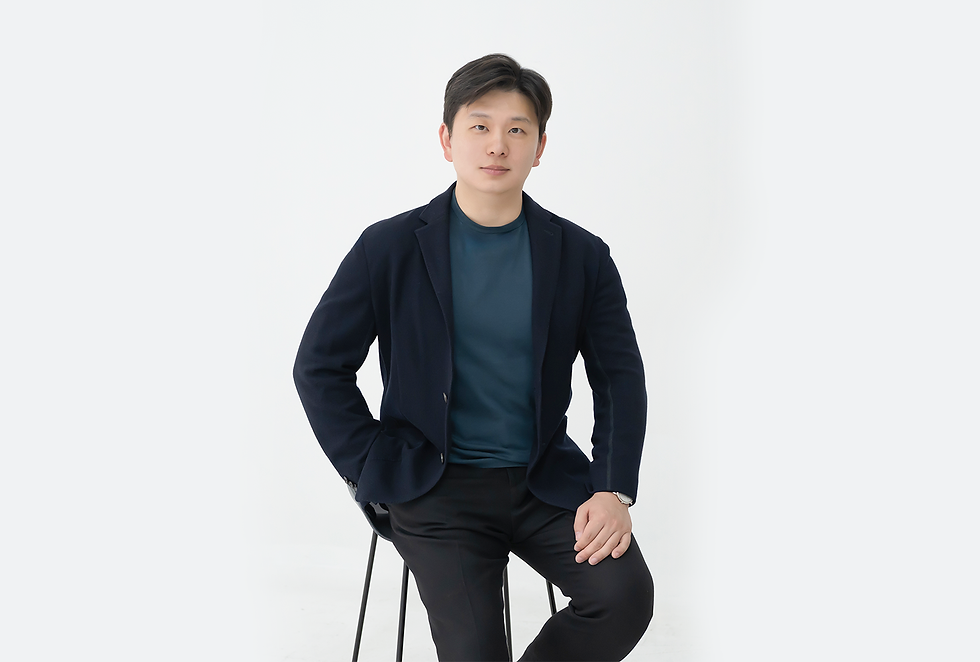
As the working-age population declines and skilled labor ages, industry-specific Artificial Intelligence (AI) is emerging as a core technology to protect the competitiveness of South Korea's manufacturing sector. Training AI with the judgment and response experience of skilled workers can enhance productivity and yield while also strengthening worker safety. Securing proprietary technology and standards that meet the precision and reliability requirements of each industry while protecting sensitive process data remains a key challenge.
In an interview on the 10th at his office in Gangdong-gu, Seoul, Cho Jeong-hyun, CEO of Mithril, stated, "Our goal is to equip advanced manufacturing equipment, such as semiconductor equipment, with an 'AI brain' that can see, judge, and act autonomously." He added, "We are advancing industry-specific AI that maintains yield and safety even without skilled engineers constantly present on site."
The future of manufacturing envisioned by CEO Cho is a factory where "thinking machines" work. The goal is to make equipment determine the causes of anomalies and perform necessary actions through the "AI agentification of process equipment." In essence, this turns equipment into robots equipped with the judgment and know-how of experts. To achieve this, Mithril has developed "NENYA sVLA," an on-device AI model equipped with GPUs and NPUs and connected to cameras, sensors, and controllers, embedding it into semiconductor equipment and other systems. He explained, "The level of 'intelligence and robotization'—where equipment diagnoses, operates, and solves problems on its own—is currently at levels 2 to 3 out of 5 compared to autonomous driving cars, but it is advancing rapidly."
CEO Cho's background in brain engineering research led him to focus on "autonomous judgment" in industrial processes. Having majored in Business Administration and Telecommunications at the University of Oregon and served as a communications officer in the Marine Corps, he earned his Master's and Ph.D. degrees in Brain Engineering at Korea University. While researching multimodal technology combining video/sensor information with human cognitive and judgment structures, as well as AI-machine integration such as robotic arms and surgical robots, he confirmed that even advanced equipment relies on the experience of skilled workers during unexpected situations. "To bridge this gap, I founded the company in late 2023 and entered the market with safety AI that detects industrial accident risks," he introduced. "By supplying solutions to companies subject to the Serious Accidents Punishment Act cases #1 and #2, we accumulated video, sensor, and operational data."
However, conducting AI research in a corporate setting with a team of Master's and Ph.D. researchers was entirely different from solving unexpected problems in actual factories. "In the beginning, we faced a series of unforeseen hurdles, which posed a high risk of burnout and turnover among team members," he candidly shared. "As much as solving technical problems, I strived to keep team members from getting exhausted. I focused on sharing the mission of preventing workplace accidents with technology and protecting manufacturing competitiveness."
Through hands-on field experience, he realized that the working principles of "AI that recognizes danger" and "AI that moves machines" are essentially the same. He subsequently expanded the company's scope to specialized AI supporting the judgment and control of industrial machinery, and he proudly noted that Mithril is now at the top level domestically. The company's AI model holds the advantage of quickly implementing solutions even with limited field data. Furthermore, as an on-device solution, it can automatically collect data generated directly from equipment and facilities.
CEO Cho is focusing on embedding AI brains into advanced process equipment alongside domestic semiconductor equipment manufacturers and global control and measurement equipment companies. This sets Mithril apart from the general-purpose VLA models of U.S. and Chinese big tech companies, which focus on various humanoid robot tasks. "We participated right from the control structure and interface design stage of semiconductor equipment," he expressed with confidence. "We are capturing the experience and know-how of skilled engineers in AI and embedding it inside the equipment. We have also verified its versatility by applying it across various fields, including semiconductors, cement, and food."
Inquiries regarding collaboration continue to pour in from domestic and international equipment and manufacturing companies. In particular, Mithril has agreed with global sensor, control/measurement, and advanced manufacturing equipment companies to apply AI models to more than 10,000 pieces of equipment over the next five years and supply them to various factories. The AI models will also be installed in control equipment of overseas security solution providers. "We earned the trust of our partners by offering recovery procedures and defining liability boundaries," he said. "We expect revenue to grow to 6 billion KRW this year, 20 billion KRW next year, and 50 billion KRW in 2028, with a target to list on the stock market within two years."
CEO Cho's vision is to distribute standardized AI engines so that companies can make existing equipment intelligent and robotized without requiring large-scale development teams. To prevent leakages of sensitive process data caused by reliance on foreign AI, he is making efforts to secure independent industrial AI standards. To accelerate the adoption of industrial AI, he advised that the government, large enterprises, equipment manufacturers, and startups must establish common standards for data utilization, safety verification, and equipment integration. He requested the government strengthen support systems linking research and development of independent technologies directly to field demonstration and commercialization, as well as investment support for serious accident prevention technologies. "Equipping industrial machinery with AI models will open a new breakthrough for manufacturing and reduce blind spots in safety management," he emphasized. "We will lead industrial AI standards to become a core engine supporting manufacturing exports."

Q&A with Cho Jeong-hyun, CEO of Mithril
- There is a perception that manufacturing AI replaces human workers. What is the reality on the ground?
"The real challenge on the ground is not job loss, but labor shortages and the loss of skilled expertise. Manufacturing AI does not replace humans; rather, it embeds the judgment of skilled experts into models, embedding that expertise directly into the equipment. Our goal is to integrate industry-specific AI standards into domestic equipment and export them globally."
- Does that mean manufacturing competitiveness depends on embedding skilled expertise into a standardized engine?
"With a shrinking working-age population and an aging skilled workforce, the AI transformation of manufacturing is essential. The core bottleneck is not algorithms, but on-site field data. While operating environments vary across industries, the underlying structure of 'perception-judgment-action' remains the same. Mithril implements this through autonomous agent models, enabling rapid application to new sectors even with limited data."
- It seems necessary to enable AI agents in advanced manufacturing equipment, such as semiconductor machinery.
"While traditional automation simply repeats predefined tasks, AI-powered equipment senses context and autonomously decides the next action. In semiconductor manufacturing in particular, even minor errors in judgment directly impact yield rate. We are currently co-developing equipment with built-in AI brains alongside domestic semiconductor equipment makers and global control and measurement companies."
- What was the background behind expanding from safety AI to a manufacturing AI model enterprise? "During my Ph.D. studies, I researched the principles of human perception and judgment, developing multimodal AI technology. In the early stages of our founding, we applied this to hazard detection to secure real-world field data. Later, we concluded that AI that perceives danger and AI that drives machinery are fundamentally addressing the same problem, leading us to expand into industry-specific autonomous agent models.
Our business model operates on two fronts: licensing/royalties by embedding the engine into equipment and production lines, and fine-tuning and operating models using field data. Safety AI serves as a stable revenue stream as well as a key channel for acquiring data. We plan to integrate our domestically validated engine into overseas equipment as well."
- What kind of relationships are you building with manufacturing field partners and equipment makers for industrial deployment?
"We aim to be an engine supplier for equipment rather than an outsourced contractor. From the design stage, we jointly develop the equipment control architecture and the AI's decision-making methods. Mithril provides the models along with training and re-training systems, while equipment makers integrate them into their products.
On the production line, we have verified false detection rates, response latency, and operational stability over extended periods. Through global factory field demonstrations, we have also evaluated protocols for failure recovery and liability boundaries. We are currently collaborating primarily on core process equipment for semiconductors and displays."
- As general-purpose robot models from the US and China continue to grow, why is a proprietary Korean model important?
"General-purpose models from the US and China focus primarily on replacing human physical tasks. However, semiconductor equipment requires nanometer-level precision, rapid decision-making, and high safety standards, making industry-specific models indispensable. Korea's core strength lies in its ability to secure highly precise field data across semiconductors, displays, and secondary batteries.
Relying on foreign models for equipment brains increases risks related to data leaks, cost fluctuations, and policy changes. Rather than competing head-on with general-purpose models, we must first establish our own proprietary standards in domains where precision and safety are paramount."
He is… He earned his Ph.D. in Brain Engineering from Korea University. After founding Mithril, he supplied safety AI to companies subject to the Serious Accidents Punishment Act, and is currently advancing 'NENYA sVLA', an industry-specific foundation model. He is actively collaborating with domestic semiconductor equipment manufacturers, global control and measurement firms, and monitoring system manufacturers. He received the Minister of SMEs and Startups Award in 2025, was named a NAVER Ph.D. Fellow in 2022, and was selected as a Global Top Talent by the Institute for Information & Communications Technology Planning & Evaluation (IITP) in 2019.
Senior Reporter Ko Kwang-bon


Comments